
Thinking About an EV Charger? What to Know First
Electric vehicles are all over the Inland Empire now. Maybe one is already in your driveway, or maybe you are close to pulling the trigger. Either way, the part most people underestimate is not the car. It is where it charges at home.
Charging off a regular wall outlet works, barely, but it is slow. Most owners want a proper home charger that fills the car overnight. Before you buy one, there are a few things worth knowing, because the charger is only half the job. The other half is whether your home can feed it.
Here is what an EV charger install really takes in a Riverside home, and how to avoid the mistakes that cost people money.
Level 1 versus Level 2, in plain terms
Illustration: Level 1 and Level 2 use different power supplies. Actual charging speed depends on your vehicle and equipment.
A Level 1 charger is the cord that comes with the car. It plugs into a standard outlet and adds just a few miles of range per hour. Fine as a backup, frustrating as a daily driver.
A Level 2 charger runs on a 240 volt circuit, the same kind of power your electric dryer or range uses, and it charges several times faster. For most households, a Level 2 charger at home is the difference between waking up to a full battery and never quite catching up.
The real question is your electrical panel
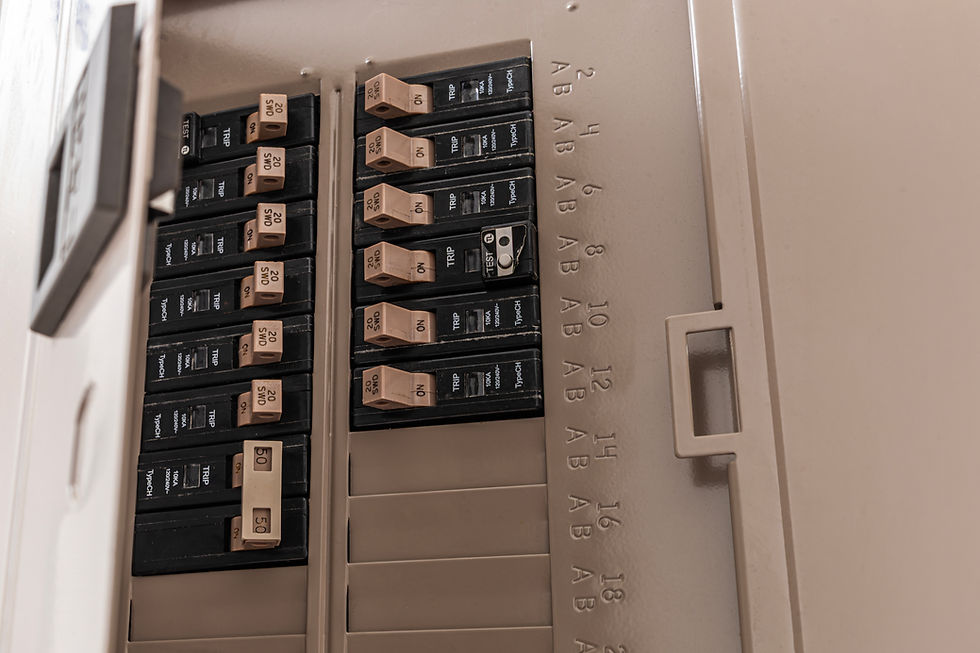
A Level 2 charger is a large, steady load. It can draw as much power as a small home running at once. That is where a lot of installs hit a wall. If your panel is older, smaller, or already close to full, there may be no safe room left to add a dedicated charger circuit.
This is why a good installer does not just mount a charger on the wall. They look at your panel first, run the numbers, and make sure the service can actually support it. If it cannot, a panel upgrade usually comes first, and it is better to find that out before you have bought a charger than after.
Not sure if your panel can handle a charger? That is the first thing we check. Book a free assessment and we will tell you what your home can support, and what it would take to get there. Call (951) 842-0356.
What a proper install involves

A home wallbox connected to an electric vehicle. Have the circuit and available service capacity assessed before installation.
Illustrated planning overview: a licensed electrician assesses the service, installs the equipment and arranges required checks.
A clean EV charger install is a dedicated 240 volt circuit run from your panel to where you park, sized correctly for the charger, with the right breaker and wire for the load. It is mounted securely, connected safely, and where required, it is permitted and inspected.
None of that is visible once the car is plugged in, but it is the difference between a charger that just works for years and one that becomes a problem. Speed matters here too. A tidy install done right the first time saves you from callbacks and from the cost of fixing shortcuts later.
Where people go wrong
The most common mistake is trying to share or tap an existing circuit, like a dryer outlet, instead of running a dedicated one. It can overload the circuit and is not how a charger should be fed.
Another is buying the biggest charger available without checking whether the panel can supply it.
DIY is tempting, but 240 volt work is not the place to learn. The load is high, the wire has to be sized exactly, and getting it wrong is a fire risk, not just a nuisance. This is a job for a licensed electrician.
Cost and timing
Every home is different, so the price depends on your panel, how far the charger sits from it, and whether any upgrade is needed to support the load. That is what an assessment is for. We look at your specific setup and give you a clear scope and price up front.
A straightforward Level 2 install is often done in a few hours. If the panel needs upgrading first, we fold both into one plan so it is handled in one coordinated visit rather than two.
Quick answers to common questions
Do I need a permit for an EV charger? In most cases yes. A permit means the circuit is inspected and on record, which protects you and keeps the install to code.
Can I use my existing dryer outlet? It is not the right way to feed a charger. A Level 2 charger should have its own dedicated circuit sized for the load.
Thinking about going electric?
The smartest move is to sort the charging before the car arrives, so it is ready on day one. We will assess your panel, tell you honestly what your home can support, and handle the charger and any upgrade together.
Franco Bros. Electric is a family owned, licensed and insured electrical contractor serving Riverside and the wider Inland Empire. Call us at (951) 842-0356 to plan your EV charger install.


Comments